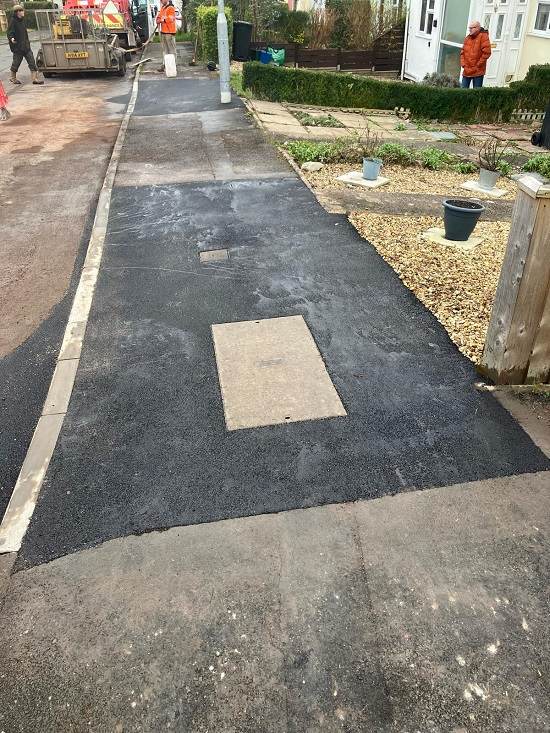
In many parts of the UK, properties are equipped with dropped kerbs to give vehicle access to driveways. Recognising the significance of accessibility, the government has designated specific areas to support wheelchair users and those with mobility vehicles. This enables them to cross roads safely and navigate pavements with ease.
It is essential to follow parking safety rules in specified zones to prevent hefty fines and ensure the safety and welfare of everyone in the community. When considering parking near the sloped edges of the dropped kerb, note that parking too close can block access. This may lead to fines or towing. Also, if your application does not meet the criteria, it will be denied regretfully, and the administration fee will be non-refundable.
What Is a Dropped Kerb?
A dropped kerb is an extension of the lowered pavement that allows vehicles to move between the road and a driveway or parking space. They are often paired with a section featuring bumps to assist blind individuals.
Typically, dropped kerbs provide access for cars to driveways, parking spots, or other off-street zones. They are also very common in domestic properties, which allow homeowners to drive directly from the kerb into their driveways.
Parking Across a Dropped Kerb
As a responsible driver, you cannot park adjacent to a dropped kerb, whether it serves a driveway, cycle lane, or pedestrian crossing. You can only access the dropped kerb if you have the property owner’s authorisation to park across it.
Purpose of Dropped Kerbs: Dropped kerbs provide access to driveways, ensure secure pedestrian crossings, and assist cyclists.
Offence: Parking across a dropped kerb, even partially, can be illegal and might lead to a Penalty Charge Notice (PCN) or parking fine.
Exceptions: There are a few peculiarities to this rule. For instance, if you have the property owner's permission to park there, or if the dropped kerb is shared with a neighbour who has permitted you.
Enforcement: Local councils can impose parking limitations concerning dropped kerbs. Moreover, residents have the right to report vehicles that are illegally parked in front of their dropped kerbs.
Safety Concerns: Parking across a dropped kerb can block access for residents, individuals with disabilities, and pedestrians, while also creating safety risks.
Reporting: If you have a firm belief that a vehicle is unreasonably parked against a dropped kerb, you can typically report it to your local council.
Important Information on Dropped Kerb Legislation
Understanding the rules about dropped kerbs is crucial for homeowners, developers, and local authorities. These rules outline the circumstances under which you can modify the kerb outside your property, including its impact on parking, access, and safety.
Legal Requirements
Permission is required: Driving a vehicle over a pavement without an approved and properly installed dropped kerb is illegal.
Local Authority Control: Local authorities oversee dropped kerb management and can implement relevant regulations.
Highways Act 1980: This act forbids driving over a pavement without a vehicle crossing, emphasising the importance of obtaining proper permission.
Traffic Management Act 2004: This act empowers local authorities to implement dropped kerb rules forcefully.
Application Process for Parking on a Dropped Kerb
To apply for a dropped kerb in the UK, you need to follow a specific application process, which typically involves:
Contact the Local Authority
You must obtain permission from your local council before installing or altering a dropped kerb.
Fees and Charges
Typically, an application processing fee is charged, along with installation costs that may differ.
Planning Permission
Planning permission may also be required, based on the location and scale of the work.
Application Process
Most councils provide an online application form, which might require a fee. You need to provide the following documents for the dropped kerb application:
- A detailed plan with measurements and any obstructions
- Site photographs
- Owner consent if different from the applicant
- Proof of planning permission, if needed
- Application fee payment details
- Utility company consent for necessary relocations, if applicable
Contractors
Accredited contractors are required to perform the job in accordance with the New Roads and Street Works Act 1991.
Site Assessment
The local authority will evaluate the site to confirm it meets the required standards, including safety and visibility.
Completion Timeframe
There may be a deadline for completing the dropped kerb installation after approval is granted.
Key Considerations for Constructing a Dropped Kerb
- Minimum Width: Dropped kerbs generally have a minimum width necessity (e.g., 3 meters at the edge of the road) and a maximum width per property (e.g., 6 meters).
- Alignment: The access point should ideally be positioned at a right angle to the road.
- Gradient: There are regulations specifying that the slope and gradient of the dropped kerb should typically not be steeper than 1 in 12 or 8%.
- Hardstanding: The area behind the dropped kerb (hardstanding) must be constructed to meet specific requirements, including a minimum length and width.
- Street Furniture: Obstacles such as road signs, lamp posts, or fire hydrants may need to be relocated at the applicant's expense.
- Utilities: It is crucial to consult with utility companies to determine if any underground pipes or wires will be affected by the work.
- Safety: The local authority will evaluate safety factors, including visibility and possible hazards, when reviewing the application.
- Multiple Crossings: Typically, only one crossing per property is permitted, unless there's a strong justification.
Existing Infrastructure: The local authority may reject or alter the application if the proposed location impacts existing infrastructure, such as trees or bus stops.
