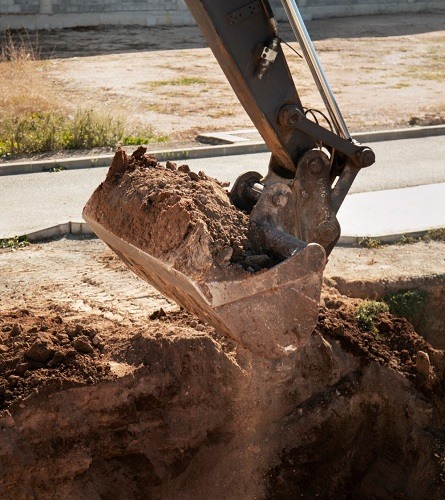
Groundworks is an accumulative name for any part of construction project where you need to break and prepare the ground. It is undoubtedly an imperative part of any construction project and comes with numerous technicalities. So, if you want to know the intricacies involved in this process, then this article is for you. Let’s begin.
Understanding Groundworks: What Lies Beneath
Groundwork is the work done for preparing the sub-surfaces before initiating any construction project. It’s usually the first and one of the most critical parts of preparing an area upon which you will be erecting the structure. The structural integrity of the foundation which is laid later on, is dependent on the groundworks, so you can well-imagine its importance. Here are some common groundwork jobs that can differ greatly with each project.
- Excavation works
- Constructing roads/pathways
- Installing utilities, such as water pipes, phone and cable service ducts, and electricity lines
- Installing and linking drainage systems
- Building retaining walls
- Preparing landscape structures i.e., panting beds or ponds
Why Every Successful Build Begins with Proper Groundworks?
Groundwork is an integral part of any construction project due to the following reasons:
Solid Foundations, Safer Sites
Groundworks are integral to preparing solid foundations and diminishing the risk of injuries and accidents during the construction process.
Stable Ground, Strong Structure
Effective groundworks ensure the building’s stability and security, reducing the risk of shifting, settling, or other movements that could cause damage.
Build to Last Starts Below Ground
The solid foundations created due to good groundworks ensure lasting stability while requiring fewer repairs over their lifespan.
Better Groundwork, Better Curb Appeal
A well-established foundation and site can help amplify the building’s overall outlook and aesthetics.
Tools of the Trade: Groundwork Gear for High-Performance Jobs
Although the gear used for groundworks varies with contractors, these generally include:
- Loading trowels
- Compactor plates
- Full-turn excavators
- 180-degree backhoe loaders
- Ride-on and hand-driven rollers
- Forward front-tipping dump trucks
Core Elements of Groundworks You Should Know
Groundworks usually involve these major components:
- Soil testing & ground inspection
- Site clearance
- Excavation & earthworks
- Foundations
- Drainage Installation
- Damp Proofing
- Installation of utility services
- Substructure and ground stabilisation works
- Landscaping
- Restoration
- Concrete Works
- Backfilling
1. Soil Testing & Ground Inspection
This is the first stage of groundworks in which your contractor inspects the ground to plan the overall scope and requirements of your project. Although not always required, the local authorities specify to undertake ground inspection, as part of the standard practices and to save capital on doing inspections later on.
In a typical ground inspection process, the ground contractor first assesses the past land use to identify several issues. These include:
- The ground adulteration by chemicals and other toxic waste.
- Old mine works which can potentially cause gas seepages and ground movement.
- Submerged structures like oil tanks, lodging, vaults, etc.
- An archaeological inspection in case there is a known ancient site.
The second part of the ground inspection process in which the geology (soil below the ground surface) is assessed first. Then hydrology (water above surface) and the hydrogeology (water below surface) of the ground are evaluated thoroughly. After this, the soil condition is investigated by checking the soil layers at the surface. Lastly, the ground contractor looks for any rare species of animals, to ensure their protection.
2. Site Clearance
This is the next phase of the project where the site is stripped of the topsoil and flattened by groundwork contractor. To hold the ground in position, retaining walls are formed while the site is secured to protect potential human or animal-related threats by restricting access. Other steps in the site clearance include:
- Reduce rust and adulteration.
- Process any notices required by planning, such as the Tree Preservation Orders.
- Provide safe vehicle access for the construction stage.
3. Excavation & Earthworks
To create space for sub-ground structures, foundations, and basements later on in the construction, the earthworks are carried out. The comprehensive earthworks include excavation, grading, and compacting. Excavation involves removal of soil, rock, and other materials using specialised equipment and intricate techniques.
The process of excavation is important for effectual earthmoving and ensuring stable foundation for the structure, later on. Specialised methods like strip, pad, or bulk excavations are utilised as per specific groundwork requirements.
4. Foundations
Foundation is a significant part of groundwork to create a strong underground base to ensure stability and uniform weight distribution. If the structure to be constructed is light and the soil possesses tolerable bearing capacity, then shallow foundations are placed near the ground surface.
However, if the building load is heavy or the soil condition is poor, then builders will need to transfer its weight to deeper soil layers, using deep foundations. Both shallow and deep foundations are two different types with specific characteristics. For instance, pile, drilled shafts, and pier are types of deep foundations, while shallow foundations include crawl space, raft, strip, etc. To ensure that the foundation meets design specifications and safety standards, quality control measures are taken.
After the foundation has cured, the excavation is backfilled with soil and compacted to support the structure. Proper compaction prevents potential settlement issues in the future.
5. Drainage Installation
Drainage systems are installed carefully and strategically, which involves placing pipes, channels, etc. The drainage systems lead water away from construction spots or regions where water buildup is feared. Water accretion is a major issue as it can cause soil erosion, damage to foundations, and compromise building materials.
Depending on the site's specific characteristics, soil type, and local regulations, three types of drainage systems are opted for:
- To manage potential surface overflow, surface drainage systems like swales and channels are installed.
- For subsurface drainage management, pipes and perforated drains are installed below the surface to hold groundwater.
- Depending on the construction requirement, combined drainage can also be installed, including both surface and subsurface components for all-inclusive water management.
After installation, different air and water pressure tests are carried out to ensure smooth operations of the drainage system.
6. Damp Proofing
Moisture or humidity is fatal for a building’s foundation. Any sort of moisture entering the structure’s foundation or walls from the ground (also called rising damp) can threaten the structural integrity of the entire edifice. Therefore, it is important to take preventive measures, or what is technically called damp proofing in groundworks, to prevent the rising damp.
Damp proofing is usually done through two processes: a damp-proof course (DPC) and/or or damp-proof membrane (DPM), both of which act as barriers against humidity access. DPC is a horizontal barricade, usually installed at the wall’s base, just above the ground level, or as part of a foundation. It prevents the rising damp via capillary action in walls and foundations.
DPM, on the other hand, are flexible sheets laid horizontally under concrete slabs or foundations. It prevents moisture from seeping through the slabs, foundations, or other regions from where moisture intrusion is feared. Depending on the specific site and project requirements, the suitable type of damp proofing technique is utilised.
7. Installation of Utility Services
Another critical part of construction projects is installing utilities during groundworks. The process ensures secure and efficient delivery of services like water, electricity, gas, and telecommunications to the site. To carry out this process, the builders need to undertake the following processes:
- Planning and Design: Outlining the layout of services, the builder also need to consider the particular project requirements and potential limitations.
- Excavation and Trenching: The builders need to prepare the ground for the installation of utility services. To install utility lines, trenching i.e., digging trenches to the particular width and depth, is required.
- Installation of Utility Lines: Pipes, conduits, and cables for all the required utilities are properly installed and secured from damage.
- Connection to Main Utility Networks: All the lines are connected to the main utility networks while other essential components like manholes and junction boxes are also installed.
8. Substructure and Ground Stabilisation Works
Substructure and ground stabilisation works address the foundation and soil conditions below ground level to ensure the stability and durability of a structure. These works include substructure works like:
- Foundations: As mentioned earlier, these are the underground bases that divide the structure load, providing a stable platform. It is basically the platform on which the entire building rests.
- Retaining Walls: These structures are constructed to develop smooth platforms that hold back soil. These are particularly required in sites with steep slopes or changing ground levels.
- Basements: These underground structures, often part of a building's design, are also considered part of the substructure.
- Damp-Proof Membranes: Another aforementioned structure, installed to prevent moisture from reaching the substructure and ravaging the foundations.
- Additional Substructure Works: Employing different ground stabilisation techniques like soil nails or ground anchors to prevent soil collapse or slippage.
9. Concrete Works
Another fundamental part of groundworks, concrete works are utilised for constructing different substructures, foundations, retaining walls, as well as during trenching, sewer construction, and drainage installation.
The mighty strength of concrete makes it best for the aforementioned objectives. Based on specific project requirements, different concrete types are used in groundworks:
- Plain Cement Concrete (PCC): A basic concrete blend utilised in diverse groundwork applications.
- Reinforced Cement Concrete (RCC): Another concrete type with steel reinforcement for added strength, particularly used for constructing robust retaining walls and foundations.
- Ready-Mix Concrete: Pre-mixed at a factory and moved to the construction site, this concrete type offers convenience and quality control.
10. Backfilling
Backfilling involves replacing excavated soil or other materials into a trench or foundation, post-construction. It's an important process in ensuring the structure’s long-term performance and durability.
For backfilling, either the same soil that was removed during excavation or imported materials like crushed stone, sand, or gravel are used. The suitable material is selected based on factors like its load-bearing capacity, the specific soil type, and particular drainage requirements.
Lay the Right Groundwork for Structures That Last – Call Professionals
Groundworks are the vital and complex phase of any construction project so you need top-notch groundwork contractors to carry out this task. A&M Groundworks can provide its service-ready, industry-led contractors who guarantee better work oversight to ensure high-level groundworks, from drainage to road construction and beyond.
