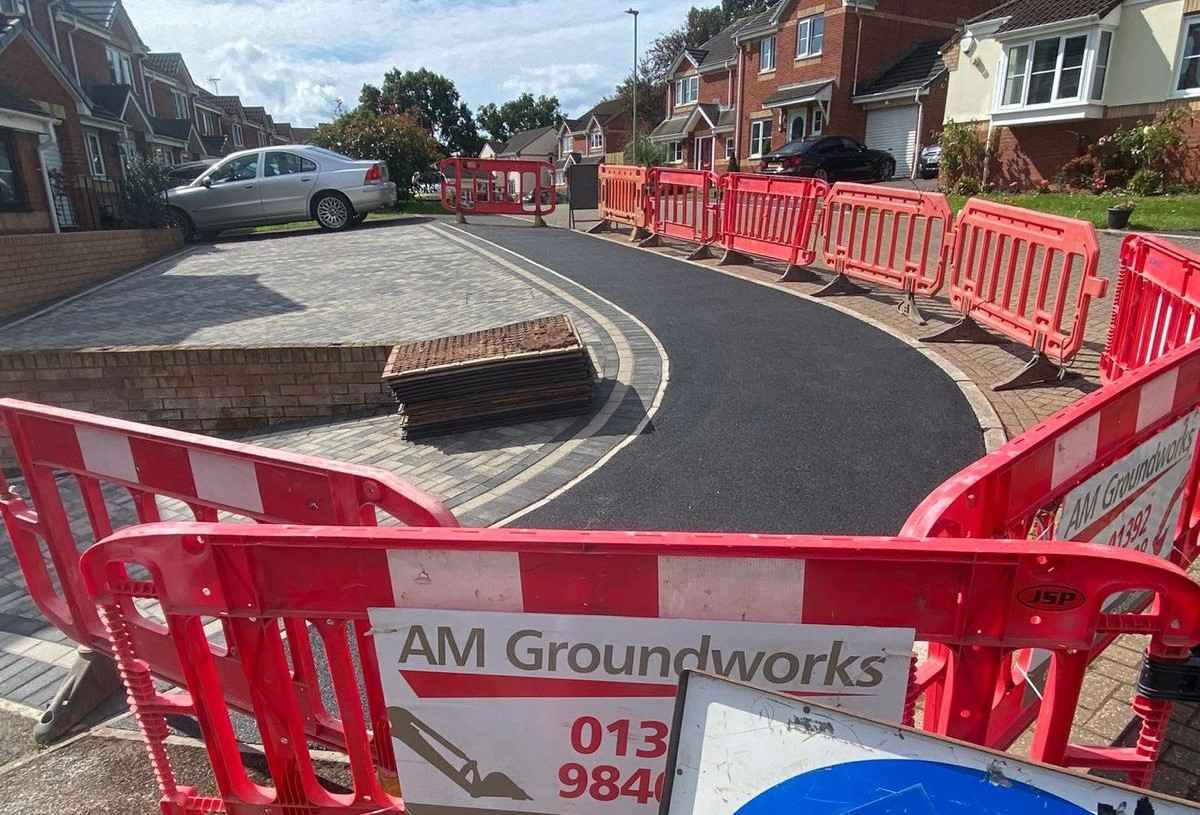
It’s a common question for UK homeowners upgrading their front garden: Can you have a driveway without a dropped kerb?
At first glance, it may seem simple. You have the space. You install block paving or resin surfacing. You park your car. Job done, right? Not quite.
In the UK, the footway and kerb outside your property are controlled by the local authority. Even if the driveway itself sits entirely on your land, the moment your vehicle crosses a public pavement, you enter regulated territory.
This guide explains the legal position, practical implications, risks involved, and the correct process, so you can make an informed decision before undertaking any driveway works.
What Is a Dropped Kerb?
A dropped kerb, also known as a vehicle crossover, is a section of pavement where the standard raised kerbstones are lowered to allow vehicles to move safely between the road and private property. It typically includes:
- Lowered kerbstones
- Strengthened pavement construction
- Tactile paving for pedestrian safety
- Proper drainage considerations
Standard kerbs are not designed to support repeated vehicle loading. The pavement underneath contains utility services, drainage pipes, and cable infrastructure. A dropped kerb ensures structural reinforcement and safe transition levels. In short, it is not just about lowering bricks; it is about engineering compliance.
Can You Legally Have a Driveway Without a Dropped Kerb?
In most cases across England and Wales, no, you cannot legally drive over a full-height kerb to access your property. Under the Highways Act 1980, it is an offence to drive over a footway where a properly constructed vehicle crossover is not in place. Local authorities regulate this to protect:
- Pedestrian
- Underground utilities
- Public infrastructure
- Liability and insurance
You may legally install a driveway surface on your private land without a dropped kerb. However, you cannot lawfully use it for vehicle access unless highway approval has been granted. This distinction is critical. Having a driveway does not guarantee legal vehicular access.
Why Some Homeowners Opt for it?
Despite existing regulations, some property owners choose to install driveways without obtaining formal kerb approval. Common reasons for this decision include:
Application Costs
The fees associated with dropped kerb applications and installations can be quite substantial, often amounting to thousands of dollars, which can vary based on location and road classification.
Project Timelines
The process of obtaining council approval can take several weeks, leading some homeowners to prefer immediate installation of their driveways.
Neighbour Assumptions
The presence of unapproved driveways in nearby properties may create the impression that formal permission is unnecessary, influencing homeowners’ decisions.
Permission Confusion
It’s important to note that planning permission pertains to land use, while highway consent pertains to accessing public land. These are distinct approvals, and understanding this distinction is crucial.
Risks of Proceeding Without a Dropped Kerb
It is essential to adhere to the proper procedures for access points. Ignoring these guidelines can have serious repercussions.
Enforcement Action
Local authorities have the power to issue notices that require you to cease using the access point or, in some cases, to restore the pavement to its original state at your own expense.
Financial Penalties
Utilising a vehicle crossover unlawfully can result in fines, which adds to the financial burden.
Liability in Case of Injury
Should a pedestrian trip or an accident occur as a result of improper access, the homeowner may be held liable for any resulting injuries.
Structural Damage
Standard curbs and pavements are not designed to withstand the repeated weight of vehicles. Over time, this can lead to damage, and repair costs may be charged back to you.
Insurance Complications
It is important to note that some insurance companies may deny claims if the access is found to be non-compliant with local authority regulations.
The Proper Process to Get Permission
If you are considering installing a driveway, here is the correct and compliant route.
Step 1: Contact Your Local Council
Submit an application for a vehicle crossover through your local highways department. Each council has specific eligibility criteria, including:
- Minimum frontage depth
- Visibility requirements
- Road classification restrictions
- Proximity to junctions
Step 2: Thorough Site Inspection
A highways officer may assess:
- Safety of access
- Drainage implications
- Impact on pedestrian routes
- Existing underground utilities
Step 3: Approval and Specification
If approved, the council will provide design specifications. These may include:
- Kerb width requirements
- Reinforced footway construction
- SuDS-compliant surfacing
- Traffic management arrangements
Step 4: Installation
Certain councils opt to handle groundwork projects internally, while others rely on accredited contractors to install a driveway with a dropped kerb. Contacting experienced groundworks specialists is essential to ensure compliance with council regulations and established structural best practice.
When Is a Dropped Kerb Not Required?
In specific circumstances, a dropped kerb may not be required. These situations include:
- Rural properties that do not have a raised kerb.
- Locations where crossovers have already been authorised.
- Certain unclassified roads (require confirmation by the local council).
It is important to note that even in these instances, obtaining written confirmation from the local authority is crucial. Relying on verbal agreements alone does not provide adequate protection.
Final Thoughts
You can build a driveway without a dropped kerb, but using it for vehicle access is a different story. A dropped kerb is not just for looks; it's a regulated access point that helps protect infrastructure, pedestrians, and property owners.
If you are thinking about installing a driveway, getting advice from experienced groundworks contractors can help you avoid issues with time, cost, and legal matters.
We at A and M Groundworks understand local authority rules and how to prepare the site properly. This ensures your driveway project looks great and complies with all legal requirements.
