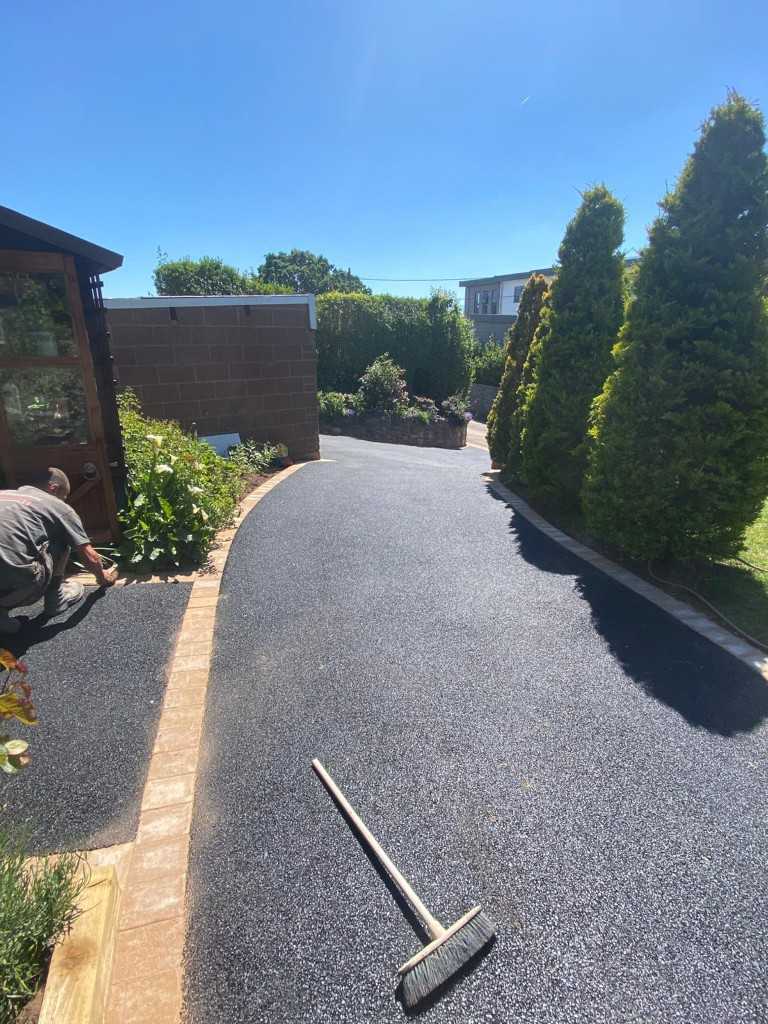
Asphalt driveways in the UK usually cost around £45 to £100 per m², depending on driveway size, groundwork, drainage, access, edging, and surface finish. A small asphalt driveway may cost around £1,500 to £3,000, while a larger two-car driveway can often range from £3,000 to £6,500+. Extra excavation, waste removal, new sub-base work, drainage channels, kerbs, and premium finishes can increase the final price.
Asphalt driveways are one of the most practical choices for UK homes because they offer a clean finish, strong durability, and a relatively quick installation process. They are commonly used for residential driveways, private roads, car parks, access lanes, and commercial surfacing. The big question, obviously, because money continues to ruin everyone’s peaceful plans, is: how much do asphalt driveways cost?
In the UK, asphalt driveway costs typically range from £45 to £100 per square metre, depending on the depth of material, site preparation, labour, drainage, and the condition of the existing driveway. Some cost guides place standard tarmac or asphalt-style driveway installations around £45 to £80 per m², while others estimate asphalt driveways closer to £80 to £112 per m² for more complete installations with groundwork included.
For a straightforward driveway, many homeowners can expect to pay somewhere between £1,500 and £6,500, although larger or more complex projects can cost more. A typical 50m² driveway may cost around £2,250 to £5,000+, depending on whether the project needs excavation, waste disposal, edging, drainage, or a new sub-base. My builder’s 2026 guide estimates tarmac driveway costs at £45 to £80 per m², while Checkatrade lists typical tarmac prices around £90 per m² including materials and labour.
That price gap is not a mistake. Driveway pricing is one of those wonderfully annoying areas where two homes on the same street can receive completely different quotes because one has a clean, level base and the other is basically a swamp wearing gravel.
Average Asphalt Driveway Cost by Size
The size of the driveway has the biggest impact on the total cost. A larger driveway needs more material, more labour, more preparation, and often more drainage planning.
Here is a practical UK price guide:
| Driveway Size | Approximate Area | Estimated Cost Range |
|---|---|---|
| Small driveway | 20m² | £900 – £2,000 |
| One-car driveway | 30m² | £1,350 – £3,000 |
| Two-car driveway | 50m² | £2,250 – £5,000 |
| Large driveway | 70m² | £3,150 – £7,000 |
| Extra-large driveway | 100m² | £4,500 – £10,000+ |
These figures are estimates, not holy scripture carved into paving slabs. Your actual price will depend on ground conditions, location, access, waste removal, surface thickness, and whether your old driveway needs to be dug out first.
Asphalt Driveway Cost Per Square Metre
The average asphalt driveway cost per m² in the UK is usually between £45 and £100 per m². Basic resurfacing or simple installations may sit at the lower end, while complete new driveway installations with excavation, sub-base preparation, and drainage are more likely to sit in the middle or higher end of the range.
A standard cost breakdown may include:
| Work Item | Typical Cost Influence |
|---|---|
| Excavation | Adds cost if the existing surface must be removed |
| Waste removal | Depends on volume and access |
| Sub-base installation | Essential for strength and long-term durability |
| Asphalt surface layer | Main visible finish |
| Edging or kerbs | Improves structure and appearance |
| Drainage channels | Often needed for water control |
| Labour | Varies by region and project complexity |
What Affects the Cost of an Asphalt Driveway?
Several factors can change the final price. Some are obvious. Some are buried underground, because apparently, even driveways enjoy having secrets.
Driveway Size
The larger the area, the more asphalt is needed. However, larger driveways sometimes have a lower cost per m² because contractors can work more efficiently across a bigger surface. Smaller driveways may cost more per m² because machinery, labour, transport, and setup costs are spread over a smaller area.
Ground Preparation
Groundwork is one of the biggest pricing factors. If your existing driveway is cracked, uneven, poorly drained, or built on weak ground, the contractor may need to excavate and rebuild the base before laying asphalt.
This can include:
- Removing old concrete, gravel, paving, or tarmac
- Digging to the correct depth
- Installing a compacted sub-base
- Levelling the area
- Preparing the falls for water drainage
A cheap asphalt surface over a poor base will not stay looking good for long. It may crack, sink, hold water, or form dips where tyres regularly sit. Lovely little reminders that shortcuts usually invoice you later.
Existing Driveway Condition
If the existing driveway is stable, level, and suitable for resurfacing, the job may cost less. If it needs full removal and reconstruction, the price increases. Resurfacing is usually cheaper than a full installation, but it only works when the base underneath is strong enough.
If the old surface has deep cracks, major sinking, poor drainage, or structural movement, resurfacing may only hide the problem temporarily.
Drainage Requirements
UK driveways need proper drainage because surface water cannot simply be pushed onto public pavements or roads. Since planning rules around front garden paving were tightened to reduce flood risk, homeowners often need to consider permeable surfaces or suitable drainage solutions where water runs towards the highway.
Drainage work may include:
- Linear drainage channels
- Soakaways
- Permeable edging areas
- Correct surface falls
- Connection to suitable drainage points
Drainage increases cost, but ignoring it can lead to standing water, surface damage, damp issues near the property, and possible planning problems. So, naturally, it is the boring part that matters most.
Driveway Access
If machinery can easily reach the driveway, installation is usually faster and cheaper. If access is narrow, sloped, restricted, or blocked by walls, steps, fences, or parked cars, labour time increases.
Poor access can affect:
- Excavation speed
- Waste removal
- Material delivery
- Compaction work
- Machinery use
A simple open front driveway is easier to price than a tight side entrance where every wheelbarrow trip becomes a tragic human endurance event.
Asphalt Thickness
Thicker asphalt layers cost more but provide better strength for regular vehicle use. A domestic driveway usually needs a suitable sub-base with a proper binder and surface layer. Driveways used for heavier vehicles, vans, or frequent traffic may need a stronger build-up.
The right thickness depends on:
- Vehicle weight
- Frequency of use
- Soil condition
- Sub-base strength
- Expected lifespan
For most homes, a professional contractor will recommend a specification based on how the driveway will be used.
Edging and Kerbs
Edging helps hold the driveway structure in place and gives the surface a cleaner finish. Without proper edging, asphalt edges can weaken over time, especially where vehicles regularly turn or park near the border.
Common edging options include:
- Concrete kerbs
- Block paving borders
- Stone edging
- Raised kerb lines
This adds cost but improves durability and appearance.
Location in the UK
Labour and material costs vary by region. Driveway work in London and the South East often costs more than in some northern areas because of higher labour rates, parking restrictions, disposal costs, and demand. Some London-focused guides estimate driveway surfacing costs around £70 to £120 per m² for certain projects.
Regional price differences are normal, annoying, and inevitable, like traffic cones appearing where no work is happening.
Waste Removal
Removing old driveway materials can add a noticeable amount to the total quote. Soil, concrete, old tarmac, rubble, and hardcore need to be disposed of properly. Checkatrade notes that waste removal using a grab truck can add hundreds of pounds, depending on the amount removed.
Waste removal costs can increase if:
- The driveway needs deep excavation
- Old concrete is thick
- Access is difficult
- Multiple loads are required
- Disposal fees are higher in your area
Finish and Colour
Standard black asphalt is usually the most affordable option. Coloured asphalt, red asphalt, stamped asphalt, or decorative borders can raise the cost. Premium finishes may improve kerb appeal, but they are not always necessary for a functional driveway.
If the budget is tight, spend money on the base, drainage, and workmanship before decorative extras. A beautiful driveway that sinks after one winter is not a feature. It is a regret with edges.
Asphalt Driveway Installation Cost Breakdown
A typical asphalt driveway installation may include several stages:
Site Survey and Quotation
The contractor inspects the driveway area, checks access, measures the surface, reviews drainage, and identifies whether excavation is needed.
Excavation
The existing surface is removed, and the area is dug to the required depth. This creates space for the sub-base and asphalt layers.
Sub-Base Preparation
A compacted sub-base is installed using suitable aggregate. This is one of the most important parts of the driveway because it supports the asphalt and prevents movement.
Edging Installation
Kerbs or borders are installed to hold the surface in place and improve the finished appearance.
Drainage Setup
Drainage channels, falls, or soakaway arrangements are added where needed.
Asphalt Laying
The asphalt is delivered hot, spread evenly, levelled, and compacted using professional equipment.
Finishing and Cooling
The surface is compacted and left to cool before use. Most asphalt driveways can be walked on sooner than they can be driven on, so always follow the contractor’s advice before parking on them.
Is Asphalt Cheaper Than Block Paving or Resin?
Asphalt is often more affordable than block paving and resin-bound surfaces. Checkatrade’s driveway cost guide lists tarmac at around £90 per m², concrete around £95 per m², block paving around £100 per m², and resin-bound driveways around £120 per m².
In simple terms:
| Driveway Type | Typical UK Cost Level |
|---|---|
| Gravel | Usually cheapest |
| Asphalt/Tarmac | Cost-effective and durable |
| Concrete | Mid-range |
| Block paving | More decorative but often pricier |
| Resin bound | Attractive but usually higher cost |
Asphalt is a strong choice if you want a practical driveway that looks neat without paying premium decorative surface prices.
Is Asphalt the Same as Tarmac?
People often use “asphalt” and “tarmac” as if they are the same thing. In everyday UK driveway conversations, many homeowners and contractors use the terms interchangeably. Technically, they are not identical materials, but both are blacktop-style surfaces used for roads, driveways, and surfacing work.
Asphalt generally uses bitumen as a binder and offers a smooth, durable finish. Tarmac, historically short for tarmacadam, uses a slightly different composition. For modern domestic driveways, the difference in conversation is often less important than the specification, base preparation, drainage, and quality of installation.
If you are asking for quotes, tell the contractor exactly what finish and build-up you want rather than relying only on the words “asphalt” or “tarmac”.
How Long Does an Asphalt Driveway Last?
A well-installed asphalt driveway can last around 15 to 25 years, depending on usage, base quality, drainage, maintenance, and weather exposure. Heavy vehicles, poor drainage, tree roots, weak sub-base work, and lack of maintenance can shorten its lifespan.
To help your asphalt driveway last longer:
- Keep it clean
- Repair cracks early
- Avoid fuel and oil spills
- Do not park heavy vehicles on weak edges
- Keep drainage channels clear
- Consider sealing when appropriate
The base matters more than most people realise. A driveway is only as good as what is underneath it. Very philosophical for a patch of ground, but there we are.
Can You Resurface an Existing Asphalt Driveway?
Yes, you can resurface an existing asphalt driveway if the base is still stable. Resurfacing usually costs less than a full replacement because less excavation and groundwork are required.
However, resurfacing is not suitable if the driveway has:
- Large cracks
- Serious sinking
- Drainage problems
- Loose or broken sections
- Weak sub-base
- Tree root damage
If these problems exist, resurfacing may only delay the need for full replacement. A contractor should inspect the driveway first and advise whether resurfacing is suitable.
Is an Asphalt Driveway Worth It?
An asphalt driveway is worth considering if you want a durable, clean-looking, cost-effective surface for daily vehicle use. It is especially suitable for larger driveways because it can be quicker to install than block paving and often more affordable than resin.
Main benefits include:
- Strong surface for cars and light vans
- Smooth finish
- Quick installation
- Good value for larger areas
- Low maintenance compared with some surfaces
- Neat, simple appearance
Possible drawbacks include:
- Less decorative than block paving or resin
- Can soften slightly in extreme heat
- Poor installation can lead to cracks or dips
- Edges need proper support
- Drainage must be planned correctly
For many UK homes, asphalt gives a sensible balance between cost, strength, and appearance. It may not win a beauty contest against premium resin or natural stone, but it does the job well, which is apparently still legal.
How to Reduce Asphalt Driveway Costs
You can reduce the cost of an asphalt driveway without destroying the quality, provided you cut the right things and not the important things.
Useful ways to manage cost include:
- Get at least three local quotes
- Choose standard black asphalt instead of coloured finishes
- Keep the driveway shape simple
- Avoid unnecessary decorative borders
- Reuse a suitable existing base if it is structurally sound
- Plan drainage properly from the start
- Book work during quieter periods if local contractors offer better availability
Do not save money by skipping the sub-base, drainage, or compaction. Those are not extras. They are the reason the driveway survives.
What Should Be Included in an Asphalt Driveway Quote?
A proper asphalt driveway quote should clearly explain what is included. Vague quotes are where budget surprises breed.
Your quote should mention:
- Total driveway area in square metres
- Excavation depth
- Waste removal
- Sub-base material and depth
- Asphalt layer thickness
- Drainage work
- Edging or kerbs
- Labour
- Machinery
- VAT, if applicable
- Timescale
- Warranty or workmanship guarantee
A and M Groundworks can be mentioned as an example of the type of groundwork and surfacing contractor homeowners may look for when comparing quotes, but always make sure any contractor explains the full preparation process before you agree to the work.
Final Thoughts
So, how much do asphalt driveways cost? In the UK, most asphalt driveways cost around £45 to £100 per m², with total project prices commonly ranging from £1,500 to £6,500+, depending on size, groundwork, drainage, location, and finish.
The cheapest quote is not always the best quote. A properly installed asphalt driveway needs good excavation, a strong sub-base, suitable drainage, professional compaction, and clean finishing. Without those, the surface may crack, sink, or hold water far sooner than expected.
If you want a driveway that is practical, durable, and cost-effective, asphalt is a strong option. Just make sure the quote covers the full job, not only the top layer. Because, naturally, the part you cannot see is usually the part that decides whether your driveway lasts or becomes an expensive outdoor regret.
