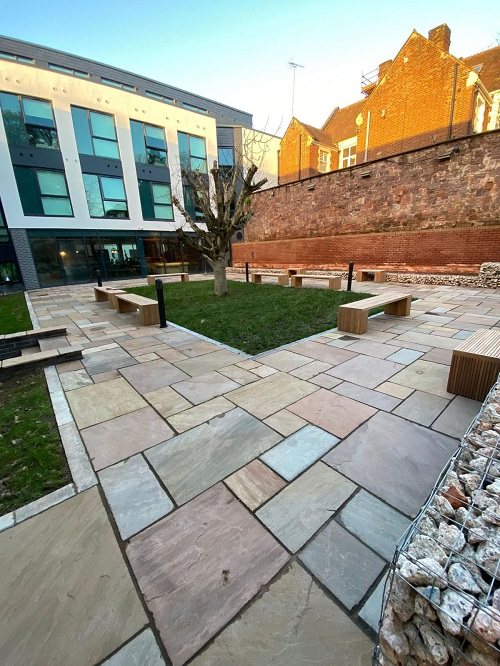
With the passage of time, patios naturally gather dirt, debris, and stains, particularly after the cooler months. As the seasons change, refreshing this exterior space to relish the hotter days pleasantly becomes vital. Even though pressure washers are generally utilised for patio cleaning, they are not always the right option. Pressure washers may scatter dirt in undesirable directions, possibly impacting surrounding plants and the sides of your residence. Additionally, they might not be appropriate for older or sensitive patio surfaces that can easily be damaged by extreme pressure.
Apart from their aggressive cleaning force, pressure washers consume significant quantities of water, which may not be feasible or preferable in every situation. A few patios need a more cautious approach that prevents needless mess and possible damage.
Cleaning a Patio Without a Pressure Washer
If you are taking into account alternative techniques or just don’t have access to a pressure washer, here is a step-by-step guide that shows how you can comprehensively clean your patio utilising more straightforward, gentler methods.
Preparing the Patio Area
The initial step to attain an immaculate patio is to start with an organised cleaning space. Clearing the patio entirely is the most efficient approach.
- Take away all furniture, plant pots, outdoor toys, gardening items, footwear, and anything else that has been sitting on the patio.
- If moving everything at once is not possible, you can clean one section at a time. Shift the items to one side, clean the accessible space, then relocate the items and clean the remaining area.
Crafting a clear space guarantees that you can adequately access each part of the surface and enables a much smoother cleaning procedure.
Comprehensive Sweeping
Once the patio is obstacle-free, it is necessary to sweep the whole area cautiously. Sweeping eliminates loose dirt, dry debris, and leaves that might have gathered in the course of time.
Without the use of a pressure washer to swiftly dislodge debris, sweeping comprehensively becomes even more critical. Take the time to gather all loose material into piles and dispose of it correctly.
Guaranteeing that the surface is as tidy and dry as possible at this phase will make the next steps considerably more efficient.
Clearing Weeds and Moss
Patios mostly develop weeds in the gaps and moss in shaded or damp regions. This step concentrates on eliminating these growths to prevent them from spreading.
- Cautiously pull out any weeds growing between the paving slabs. Strive to extract the roots along with the visible parts to decrease the chances of regrowth.
- For tougher weeds that are hard to eradicate by hand, there are natural weed-removal methods available. Homemade solutions may aid in controlling weed growth without introducing hazardous substances.
- Moss tends to prosper in moist corners and shaded patches. If the moss layer is thick, you can softly scrape it off at this phase. If it does not come off smoothly, it can be dealt with during the scrubbing procedure in the next steps.
Eliminating these unwanted growths helps preserve the patio’s look and avoids possible damage caused by spreading roots or moisture retention.
Wetting and Scrubbing the Surface
After clearing the debris and weeds, the next step is to wet the patio. This softens any dirt that is sticking to the surface and prepares it for scrubbing.
- If you have a big patio, it is practical to clean in smaller sections instead of wetting the whole area simultaneously.
- Utilise a stiff broom to scrub the wet surface. A stiff broom aids in dislodging dirt from the patio without needing dedicated equipment.
- For thorough cleaning, prepare a solution utilising water mixed with dish soap. A tiny amount of dish soap is sufficient – using too much may lead to excess foam that is hard to rinse away.
- Add the soapy solution across the patio. You can either pour it directly or dip the broom into the bucket prior to scrubbing.
- Concentrate on scrubbing firmly to lift dirt and eliminate any remaining grime. To attain a positive result, you might need to repeat the scrubbing procedure for specifically dirty patios.
This is the most time-consuming part of the procedure, but it is extremely efficient in restoring the patio’s surface without utilising aggressive equipment.
Rinsing and Checking for Missed Areas
Once you have comprehensively scrubbed the patio, it is necessary to rinse off the soapy residue.
- Do not let the soapy water dry on the surface, as this may cause dirt to settle back onto the patio.
- Once the surface is rinsed and dried, examine the whole area carefully. It is common to find tiny spots that might have been missed during the initial cleaning.
- Utilise extra soapy water to clean these smaller sections and guarantee the whole patio is uniformly cleaned.
Rinsing adequately guarantees that no leftover soap or dirt remains, leaving the patio fresh and free of residues.
Addressing Stubborn Stains
Even after diligent cleaning, a few stains might remain. A stronger cleaning solution can be employed to remove these more persistent marks.
- Mixing water with white vinegar in equal parts generally aids in eliminating tough stains.
- Softly scrub the impacted areas with this solution, being mindful of the surface condition to avoid over-scrubbing.
The efficiency of this technique will differ depending on the type of stain and how long it has been present. Cautious, rigorous cleaning can make a considerable difference.
Common Patio Cleaning Mistakes to Avoid
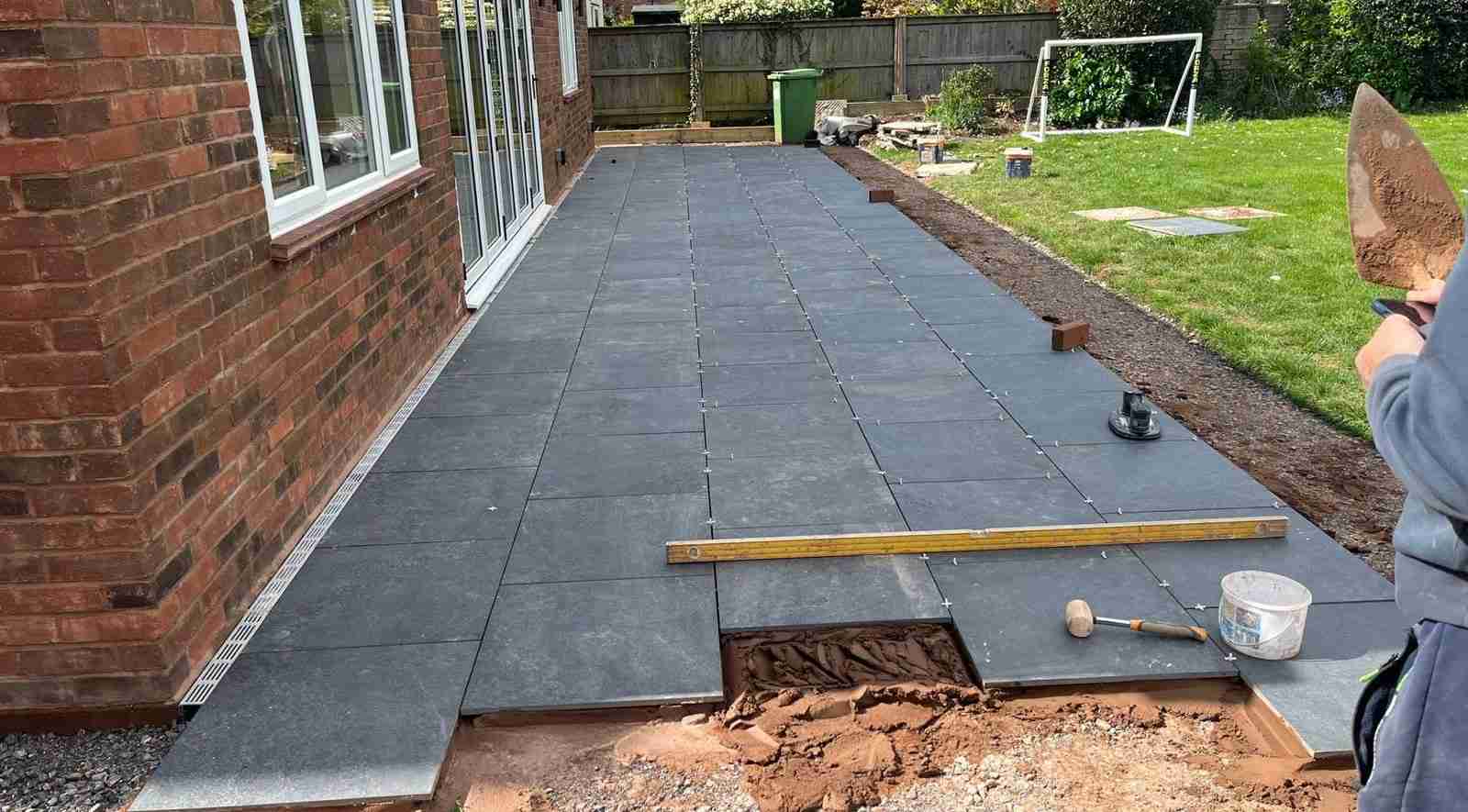
Even though cleaning a patio without a pressure washer is simple, the following are a few of the frequent mistakes that can decrease cleaning efficiency or even harm the patio surface.
Choosing Unsuitable Cleaning Solutions
One of the most frequent errors is choosing cleaning products that are not appropriate for the patio’s material. Various surfaces, such as concrete, stone, wood, or tiles, react differently to specific cleaners. For example, utilising bleach on wooden areas may cause the material to weaken and lose its colour. In a similar manner, utilising acidic cleaners on natural stone may leave permanent marks and harm the surface.
In the past few years, more householders have started using environmentally friendly cleaning products, which are better for both the patio and the nearby environment. Nevertheless, even with these solutions, it is necessary to check that the product is compatible with the patio material. Neglecting this may result in unsatisfactory results or surface damage that might later need expensive repairs.
Skipping Proper Surface Preparation
Another frequent problem is not preparing the surface well prior to cleaning. When loose dirt, leaves, and debris are left on the patio, cleaning becomes uneven, and a few areas might remain dirty. Cleaning agents deliver the best results when applied to a surface that has been adequately cleared beforehand. Neglecting this step may result in stains not lifting and might even enable dirt to remain trapped.
Using the Wrong Tools
Choosing the wrong cleaning tools might cause more damage than good. Hard-bristle brushes might work for rough concrete, but they can scratch more sensitive stone surfaces. A few tools that appear appropriate might not actually match the particular patio material and can cause surface damage if not utilised cautiously.
Seasonal Care Tips for Patios
Keeping your patio in fine condition is not only about one thorough clean. Routine seasonal maintenance can preserve its look and avoid further problems.
Spring: Examine the joints between paving slabs for signs of wear. If necessary, apply fresh pointing to retain the patio’s structure and avoid weed growth.
Summer: When utilising the patio for gatherings or meals, it is vital to rapidly clean up any spills to prevent permanent stains.
Autumn: Routinely sweep away fallen leaves and accumulated dirt. Leaving debris on the surface may result in staining and complicate future cleaning.
Winter: Abstain from utilising de-icing salts on the patio, as they may cause discolouration and damage the surface after a while.
All-year-round care not only keeps the patio looking its finest but also helps to avoid bigger issues that might require more considerable repairs.
Repair and Joint Maintenance
Apart from cleaning, it’s essential to keep track of the condition of the patio structure.
- Check routinely for broken or cracked paving slabs. These can be cautiously lifted and replaced with new pieces that match the original surface.
- Inspect the joints between the slabs. If the pointing has worn away or loosened, it must be refreshed to safeguard the structure and avoid weeds from taking hold.
Keeping the surface intact and the joints properly maintained plays an important role in ensuring the lasting durability and appearance of the patio.
Long Story Short!
Cleaning a patio without counting on a pressure washer is not just possible but can also be extremely efficient when done appropriately. This method lets you care for sensitive surfaces and older patios without risking needless damage. By following the proper steps—preparing the space, sweeping cautiously, eradicating weeds and moss, scrubbing comprehensively, rinsing correctly, and handling any stains—you can attain a fresh, tidy patio that is ready for use.
Routine seasonal maintenance and prompt repairs further guarantee that your patio remains in excellent condition for the whole year.
If you are considering elevating your exterior space with adept care and professional groundwork services, A and M Groundworks can help retain and enhance your patio to help it look its finest at all times.
