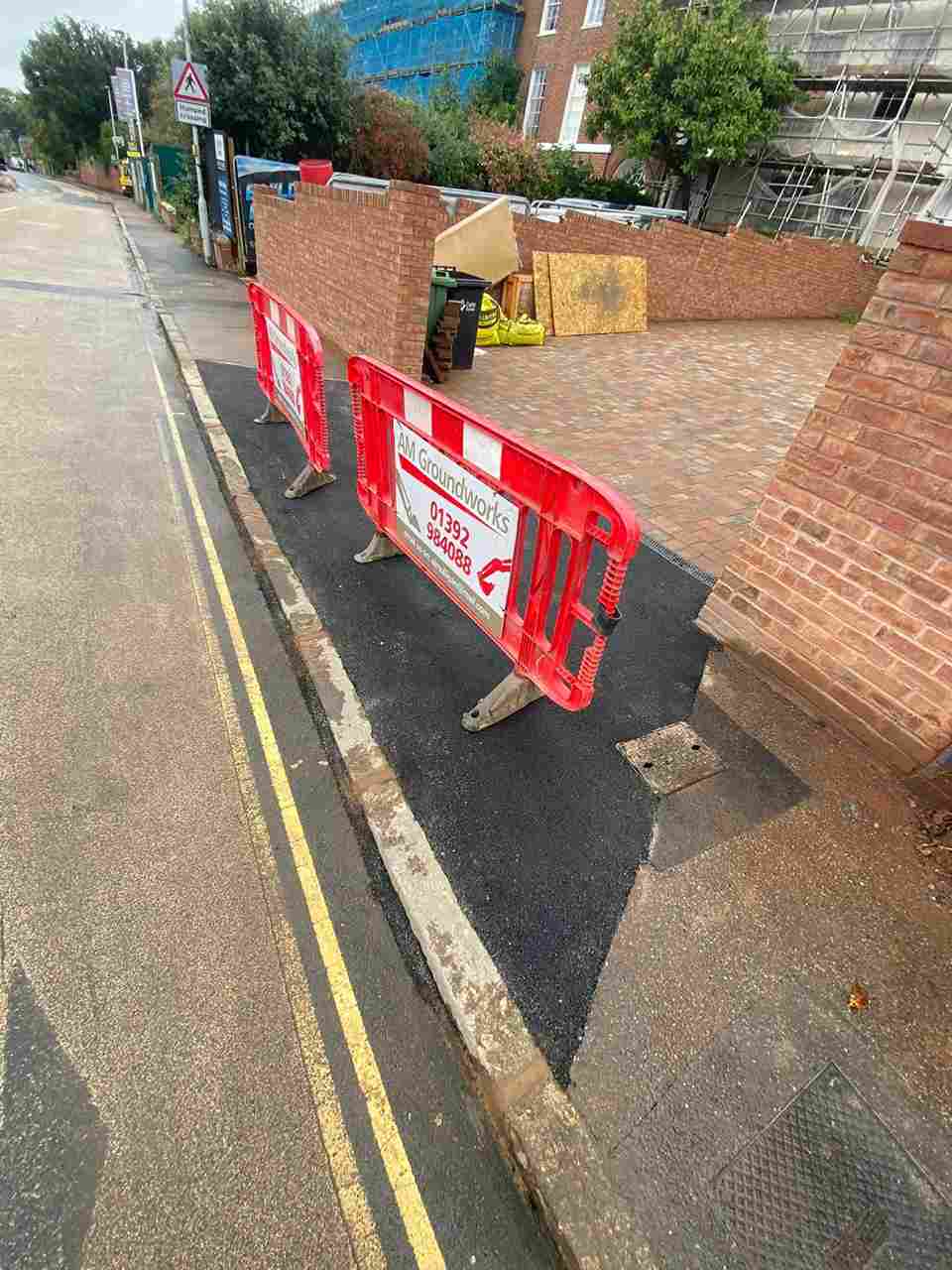
Parking outside your home can be convenient, especially when you have your own driveway. However, if there is a raised pavement in front of your property, you cannot legally drive over it without installing a dropped kerb. Many homeowners look for ways to reduce the costs and often ask whether it is possible to get a free dropped kerb.
In reality, getting a completely free dropped kerb is uncommon. However, there are specific situations where you may qualify for financial assistance or reduced costs. This guide helps you understand what a dropped kerb is, why you need one, how to apply, and in which cases you might be eligible for support.
What Is a Dropped Kerb?
A dropped kerb is also named as a vehicle crossover. It is a lowered section of pavement that allows vehicles to move from the road onto a private driveway legally and safely. It replaces the standard raised kerb stones with sloped or flat kerbs that provide smooth access for vehicles.
The pavement in front of your home is a part of the public highway. This means you cannot alter it yourself or drive over it without official approval from your local council. A dropped kerb ensures safe access while protecting pedestrians, underground utilities, and the pavement structure.
Why Do You Need a Dropped Kerb?
You may think that if you have enough space in your front garden, you can simply drive over the pavement. However, this is not permitted, and here is why a dropped kerb is necessary:
Legal Requirement
Driving over a raised kerb without permission is illegal in many areas. The pavement is public property, and crossing it without an authorised dropped kerb can result in fines or enforcement action from the council.
Protection of Public Infrastructure
Underneath the pavement, there may be utility cables, water pipes, gas lines, or drainage systems. Driving over an unauthorised section can damage these services and cause serious issues.
Pedestrian Safety
A properly constructed dropped kerb ensures a smooth transition between road and driveway. Without it, broken or damaged kerbs can create trip hazards for pedestrians.
Avoiding Vehicle Damage
Repeatedly driving over a raised kerb can damage your vehicle’s tyres, suspension, and undercarriage. A dropped kerb prevents unnecessary wear and tear on your vehicle.
Can You Get a Free Dropped Kerb?
In most cases, homeowners are responsible for covering the cost of installing a dropped kerb. Councils usually charge an application fee, an inspection fee, and a construction cost. However, there are still certain situations where you may receive financial support.
Disabled Access or Mobility Needs
If someone in your household has a disability or serious mobility issue, you may qualify for assistance through a Disabled Facilities Grant (DFG). In some cases, the local authority may cover all or part of the cost if a dropped kerb is necessary for accessibility.
Eligibility depends on:
- Medical need
- Property suitability
- Financial assessment
You will typically need to apply through your local council and provide supporting documentation.
Council Regeneration or Improvement Schemes
If your area is undergoing council-funded regeneration, road improvement, or housing upgrades, the local authority may install dropped kerbs as part of the project. This is not common, but it does happen in specific schemes.
Council or Housing Association Tenants
If you live in a council-owned or housing association property, you should contact your landlord. In some cases, they may arrange and fund the installation if it meets their policies and criteria.
How to Apply for a Dropped Kerb?
Step 1: Check Eligibility Requirements
- Safe visibility for entering and exiting
- Compliance with local planning regulations
- No obstructions such as lamp posts, trees, utility boxes, or bus stops
- Sufficient driveway depth (often around 4.8m to 5m for a standard vehicle)
Step 2: Determine Whether Planning Permission Is Required
In some cases, you may also need planning permission. This typically applies if:
- Your property is listed
- You live in a conservation area
- Your property is split into flats
- Your property is on a classified or busy road
- You are converting a front garden into a hard surface without proper drainage
- A boundary wall higher than 1m needs to be knocked down for kerb installation
It is important to confirm this before proceeding.
Step 3: Submit an Application to Your Local Council
You must apply directly to your local authority. The process usually involves:
- Completing an online or paper application form
- Paying a non-refundable application fee
- Providing property details and site plans
The council will inspect your property and determine whether approval can be granted.
Step 4: Approval and Construction
If approved, the council may:
- Carry out the work themselves, or
- Require you to use an approved contractor from their authorised list
You are not allowed to install a dropped kerb without formal approval.
How Much Does a Dropped Kerb Cost?
Although costs vary depending on location, typical charges may include:
- Application and inspection fees
- Construction costs (materials and labour)
- Additional costs if utilities need adjusting
In many areas, the total cost can range from several hundred to a few thousand pounds, depending on complexity. If you are applying for a grant due to disability, some or all of these costs may be covered after assessment.
Common Reasons Applications Are Refused
- Insufficient driveway space
- Close proximity to junctions
- High traffic volume on the road
- Safety concerns due to poor visibility
- Presence of street furniture or protected trees
What Happens If You Install a Dropped Kerb Without Permission?
Installing or modifying a kerb without council approval can lead to serious consequences, such as:
- Fines
- Enforcement notices
- Liability for damage to underground services
- Requirement to reinstate the pavement at your own cost
Tips to Improve Your Chances of Approval
- Providing accurate measurements and site details
- Confirming planning permission requirements in advance
- Ensuring your driveway meets the minimum size requirement
- Consulting professionals for proper driveway design and drainage
Conclusion:
Getting a completely free dropped kerb is rare for most homeowners. In most cases, you are responsible for covering the cost of installation. However, if you or someone in your household has mobility needs, or if you live in a council-managed property, financial assistance may be available.
The most important step is to follow your local council’s official procedure and avoid carrying out any unauthorised work. By understanding the requirements, checking eligibility, and applying correctly, you can ensure the installation process continues smoothly and in compliance with relevant regulations. If you are unsure about the process, it is always advisable to consult your local authority or seek professional guidance before proceeding.
