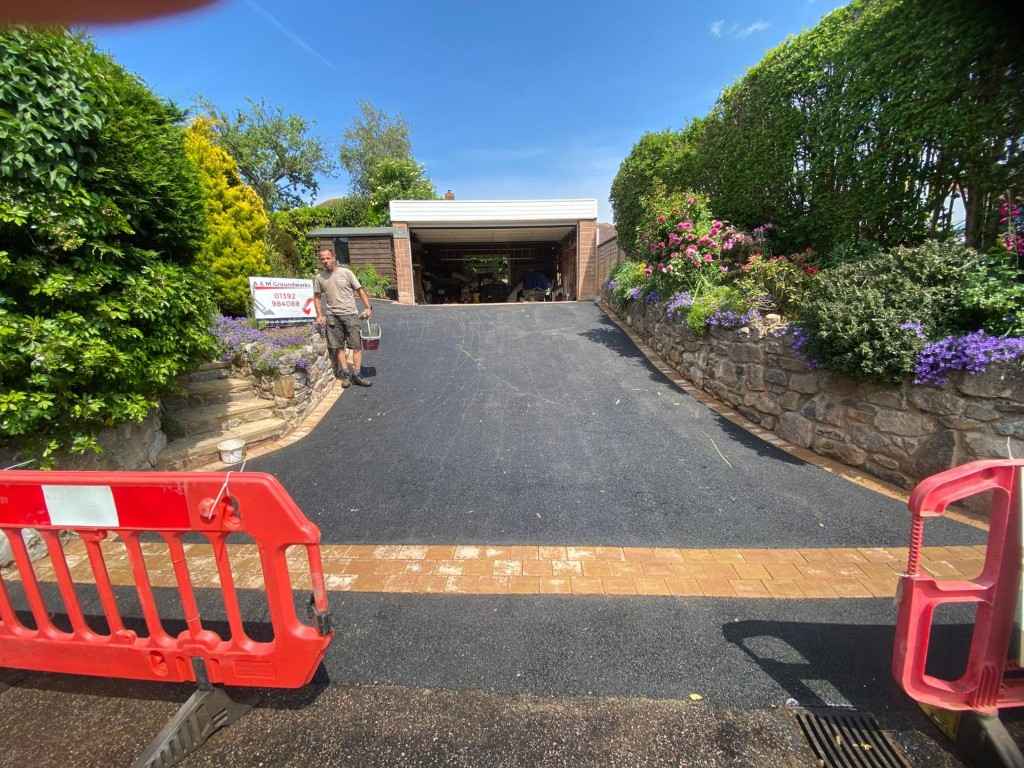
Resin driveways usually crack because of ground movement, a weak base, poor sub-base preparation, incorrect resin mixing, inadequate drainage, heavy loads, or unsuitable installation weather. The visible crack is often caused by movement below the resin rather than failure of the surface alone. Correct groundwork and professional installation provide the best protection.
Resin driveways are popular across the UK because they provide a smooth, attractive finish with good durability and low maintenance. However, they can crack when the ground, base, materials, drainage, or installation method is unsuitable.
How a Resin Driveway Is Constructed
A resin-bound driveway normally includes compacted ground, a load-bearing sub-base, a stable asphalt or concrete base, and a surface layer made from resin mixed with decorative aggregate.
A finish cannot compensate for weak foundations. When failure develops underneath, pressure transfers upwards and appears as cracking, sinking, or separation.
Ground Movement Beneath the Surface
Ground movement is one of the main reasons resin driveways crack. Soil expands, contracts, settles, and shifts as moisture levels change.
Clay soil is particularly vulnerable because it swells during wet weather and shrinks during dry periods. Tree roots, leaking drains, previous excavation, and poorly filled ground can create similar problems.
If the driveway is installed over disturbed soil, settlement may continue after completion. Uneven settlement can force the resin to bend beyond its limits.
Weak or Damaged Base
The base provides structural support for the resin surface. Resin-bound material should usually be laid over stable asphalt or concrete that can carry the expected vehicle load.
Installing resin over cracked concrete, damaged tarmac, or an unstable base may hide defects temporarily, but it does not remove them. As the original crack moves, it may appear through the resin above. This is known as reflective cracking.
A responsible installer should inspect the base first. Significant damage may require repair or replacement rather than an overlay.
Poor Sub-Base Preparation
The sub-base must be excavated to an appropriate depth, filled with suitable aggregate, and compacted evenly.
If it is too shallow or poorly compacted, weak pockets can form. These sections may sink once cars regularly use the driveway. Correct groundwork is essential.
A and M Groundworks recognises that long-term resin driveway performance depends heavily on preparation completed before the decorative surface is installed.
Incorrect Resin Mixing or Application
Resin and aggregate must be measured and mixed accurately. Every stone should receive an even coating so the finished layer forms one consistent surface.
Too little resin can leave aggregate weakly bound, while excessive resin can affect curing and permeability. Incomplete mixing may create dry patches that loosen or crack early.
Each batch should follow the same proportions and mixing time. Inconsistent batches can produce sections with different strengths. The resin must also be laid at a consistent depth because thin areas are more vulnerable to vehicle pressure.
Installation in Poor Weather
Weather directly affects resin curing. The surface should not be installed during rain or over a damp base because moisture can interfere with bonding.
Water contamination may cause clouding, foaming, poor curing, or weak areas. Low temperatures can slow curing, while excessive heat can make the resin set too quickly to finish correctly.
Inadequate Drainage
Resin-bound driveways can be permeable, but water still needs a properly designed route into the ground or drainage system.
Standing water may indicate incorrect falls, blocked channels, unsuitable base construction, or poor edge detailing. Persistent moisture can soften supporting layers and encourage settlement.
During cold weather, trapped water may freeze and expand. Repeated freeze-thaw cycles can widen weaknesses, especially around drains, edges, and joints.
Heavy Loads and Turning Pressure
Domestic resin driveways are generally designed for cars and normal household use. Heavy vans, skip lorries, construction machinery, or repeated commercial traffic can place greater stress on the surface.
Damage is more likely when heavy vehicles turn their wheels while stationary, creating concentrated twisting pressure. Weak edges, thin resin areas, and poorly compacted bases are most vulnerable.
Missing Movement Joints
Concrete bases expand and contract as temperatures change. Movement joints control where this movement occurs.
If existing joints are covered completely by resin, movement in the concrete can create a straight crack in the finished surface. Installers should identify joints before laying resin and reflect them through the final design where necessary.
Weak Edge Support
Driveway edges need secure restraints such as kerbs, block paving, or another stable border. Without firm support, the resin layer may spread, crumble, or crack under pressure.
Entry points are particularly vulnerable because wheels repeatedly cross the same edge. Cracks around gates, drains, paths, or pavement connections often suggest inadequate edge support.
Can Cracked Resin Be Repaired?
Small localised cracks may be repaired using matching resin and aggregate. However, the cause must be identified first. Filling the visible line without fixing movement below may provide only a temporary repair.
Larger cracks, sinking, loose aggregate, or widespread damage may require the affected section to be cut out and rebuilt. If the base has failed, repairs must extend below the resin layer.
Early assessment matters because minor defects are usually easier and cheaper to correct before water enters and movement worsens.
How to Prevent Cracking
Prevention starts with a proper site assessment. The installer should consider soil conditions, drainage, expected traffic, tree roots, existing cracks, and base stability.
The sub-base must be compacted correctly, while the base should be clean, sound, and suitable for resin. Materials must be measured accurately, mixed consistently, and laid at the required depth in dry weather.
Movement joints and strong edge restraints should be included where needed. Drainage channels must remain clear, and heavy skips or machinery should not be placed directly on the surface without protection.
Routine cleaning helps keep drainage routes open and makes early defects easier to spot.
Final Thoughts
Resin driveways mainly crack because something beneath or within the installation has failed. Ground movement, weak foundations, poor mixing, bad weather, drainage problems, excessive loads, missing joints, and unsupported edges are the most common causes.
A correctly designed and professionally installed driveway can remain attractive and serviceable for many years. The key is to invest in the complete structure, not just the decorative finish.
